
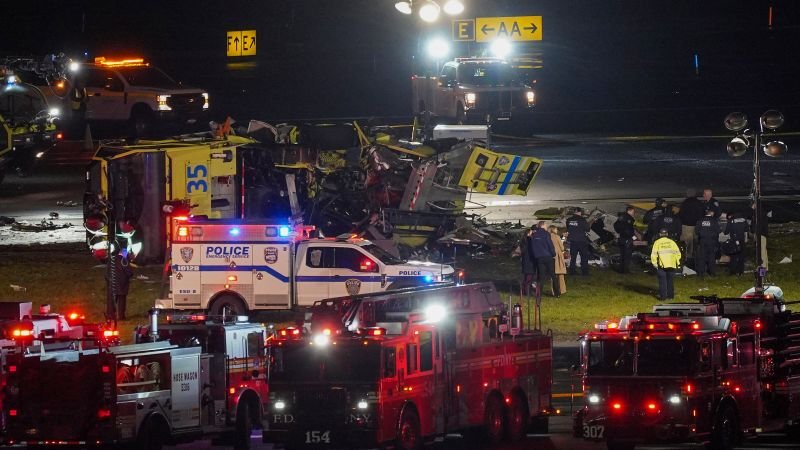
Welcome back to The NewsCutlet, your daily source for the intersection of technology, safety, and modern logistics. Today, we are covering a somber and developing story from New York City that has sent shockwaves through the aviation industry and the tech world alike. A deadly collision on the tarmac at LaGuardia Airport has resulted in two fatalities and a complete operational standstill, highlighting the fragile balance between human oversight and automated safety systems.
The Incident: A Collision on the Runway
In the early hours at New York’s second-largest airport, what should have been a routine maneuver turned into a catastrophe. Air Canada flight 8646, a regional turboprop, was involved in a high-speed collision with a local fire truck on the airfield. Preliminary reports indicate that the impact was devastating, leading to the immediate deaths of two individuals.
While investigations are in the earliest stages, the focus has rapidly shifted toward the communication protocols between the tower and the ground crews. In the immediate aftermath, LaGuardia Airport was placed under a partial shutdown, causing a massive ripple effect of travel turmoil across the busy Northeast corridor. Thousands of passengers found themselves stranded as the Federal Aviation Administration (FAA) worked to secure the scene and begin the painstaking process of data recovery.
The ‘I Messed Up’ Moment: A Human Failure in a Tech-Driven World
Perhaps the most chilling aspect of this tragedy is the audio emerging from the Air Traffic Control (ATC) ground frequency. Approximately eighteen minutes after the collision, a controller in the tower was recorded saying, “I messed up.” This candid admission, captured by digital recording systems, underscores a recurring theme in modern tech news: even with the most advanced monitoring systems in place, the human element remains the most significant variable.
For a general tech audience, this incident raises several critical questions about the current state of aviation ground safety. Why did the automated alert systems fail to warn the pilot or the truck driver? How does our current infrastructure manage the complexity of a crowded tarmac?
Why This Matters: The Technology Behind the Safety
To understand the significance of this event, we must look at the technology designed to prevent exactly this kind of disaster. Aviation safety is a multi-layered ecosystem, and when a collision occurs, it suggests a systemic failure in one or more of the following areas:
- ASDE-X (Airport Surface Detection Equipment, Model X): This is a surveillance system that integrates data from surface movement radar, multilateration systems, and ADS-B (Automatic Dependent Surveillance-Broadcast). Its primary goal is to help controllers detect potential collisions between aircraft and vehicles on the ground. If a controller says, “I messed up,” we must ask if the ASDE-X system provided a visual or auditory warning, and if not, why?
- Ground Radar and ADS-B Integration: Modern fire trucks and emergency vehicles are increasingly equipped with transponders that should make them visible on the ATC’s digital map. The failure to reconcile the positions of Flight 8646 and the fire truck suggests a gap in the real-time tracking of non-aircraft surface vehicles.
- Automated Conflict Detection: Software algorithms are designed to predict ‘conflicts’ (when two objects are on a path to collide). In a high-density environment like LaGuardia, these algorithms must be tuned to avoid ‘alarm fatigue’ while remaining sensitive enough to catch genuine threats. Tuning these systems is one of the greatest challenges in aviation software engineering.
The Tech Commentary: Lessons for the Future
The significance of this story goes beyond the immediate tragedy. It serves as a stark reminder of the limitations of our current infrastructure. Here is why this is a pivotal moment for the industry:
1. The Transparency of Digital Records: The fact that we have the ATC audio so quickly is a testament to the digitization of our airspace. Publicly accessible flight tracking and radio streaming services like LiveATC.net have changed the way we hold institutions accountable, providing immediate transparency during crises.
2. The Push for Fully Autonomous Safety Loops: This incident will likely accelerate the push for “autonomous safety overrides.” Imagine a system where the aircraft’s brakes are automatically applied if ground radar detects a vehicle in its path, bypassing the need for a controller’s verbal command. We are seeing similar tech in the automotive world with Automatic Emergency Braking (AEB); the question is when it becomes standard for the taxi phase of flight.
3. Infrastructure Resilience: The shutdown of LaGuardia highlights how vulnerable our logistics tech is. When one major node in the network fails, the software used for re-routing and passenger management is pushed to its absolute limit.
Looking Ahead
As the National Transportation Safety Board (NTSB) begins its deep dive into the black boxes and digital logs of Flight 8646, the tech community will be watching closely. This isn’t just a story about a tragic accident; it is a story about the systems we trust with our lives every day. We must continue to innovate, not just to make travel faster, but to ensure that the “human error” variable is mitigated by intelligent, redundant, and fail-safe technologies.
Stay tuned to The NewsCutlet as we continue to track the forensic data and technical reports released in the wake of this event. Our thoughts remain with the families of those lost in this tragedy.