
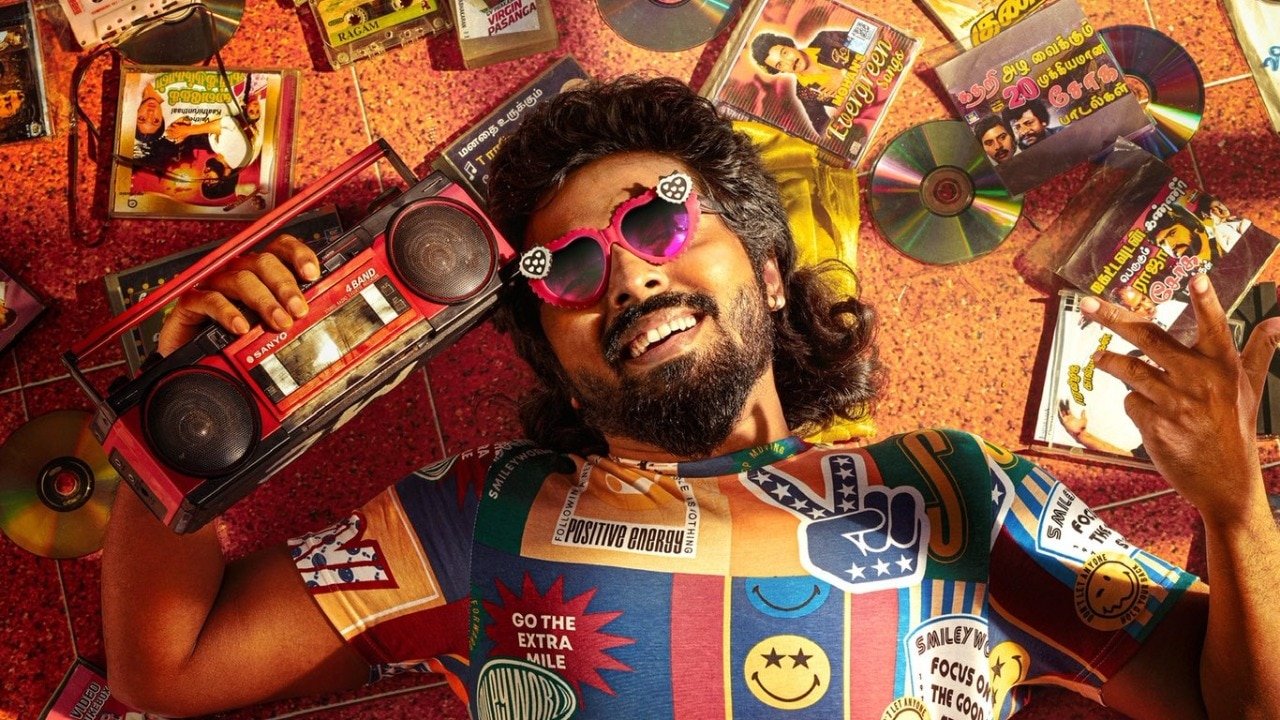
Introduction to Happy Raj
Released on March 27, 2026, the film Happy Raj, directed by T Maruthi Acharya and starring G.V. Prakash Kumar, attempts to tackle familiar themes of insecurity, social perception, and acceptance. While the movie boasts an emotional core, it struggles to convey its message effectively due to poor writing choices and forced humor.
A Missed Opportunity
Happy Raj could have potentially been a profound exploration of its themes, much like successful films such as Don and Dragon. However, the film often loses its way, taking bizarre detours that distract from its intended emotional resonance. The reliance on comedy feels misguided, as moments intended to invoke laughter often end up feeling flat.
Plot Overview
The storyline revolves around Anand Raj, affectionately known as Happy, portrayed by G.V. Prakash Kumar. Happy is a hopeful young software developer whose optimism is continuously challenged by repeated failures in life. His father, Kathamuthu (George Maryan), becomes the focal point of ridicule due to his appearance, unearthing a range of insecurities that affect Happy’s personal relationships, particularly with his love interest, Kavya (Sri Gouri Priya).
Contrived and Predictable Writing
From the onset, the film’s writing feels artificial, especially in scenes where a girl rejects Happy purely based on his father’s looks. This approach not only comes off as insensitive but also erodes any potential for authentic storytelling. This pattern continues throughout the film with exaggerated situations that lead to a preachy climax.
The Struggle with Humor
Much of the humor in Happy Raj relies heavily on jokes about Kathamuthu’s appearance, lacking cleverness and originality. Rather than being amusing, these repetitive jabs create discomfort and detract from the seriousness of the underlying message. Moreover, attempts to juxtapose rural and urban life come off as superficial.
Character Dynamics and Performances
Despite the script’s challenges, some moments shine through. The interactions between Happy and his mother, played by Geetha Kailasam, depict warmth and authenticity. Scenes depicting the conflict between Kathamuthu and Rajiv (Abbas) offer glimpses of emotional honesty.
George Maryan stands out as Kathamuthu, portraying depth in a character faced with unfortunate writing choices. His sincerity manages to elevate certain scenes, making him a pivotal element of the film.
The Performances
G.V. Prakash Kumar delivers a heartfelt performance, effectively showcasing Happy’s innocence. However, the inconsistency in his character’s writing sometimes undermines his effectiveness. Similarly, Abbas brings an undeniable polish to his one-dimensional role, even if the writing does not do justice to his potential.
Conclusion: A Film with Potential
In summary, Happy Raj grapples with several relatable themes, yet it falters due to uneven writing and a heavy reliance on forced humor. While the emotional beats at times resonate, the overall execution leaves much to be desired. This film serves as a reminder of the importance of authenticity in storytelling, particularly when dealing with sensitive subjects. As the credits roll, one can’t help but wish that the promising concept had been paired with a more thoughtful script.